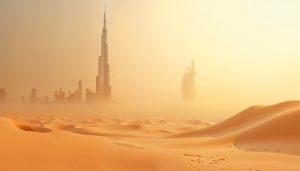
The Dubai Weather and its impacts on the daily life

Dubai weather plays a huge role in the way of life of the people, employment, and commute in the city. Dubai city is located in the United Arab Emirates, and it has a desert climate. This means that it is always hot and dry most of the year. Knowledge of Dubai’s weather will help the students to know about the climate, geography, and how human beings adapt to their environment.
The weather in Dubai is characterized by hot, intense sunrays and little rainfall. Such weather patterns influence the mode of dressing, construction, and outdoors and even school timetables. Through observing the Dubai weather, the students will be able to relate their lessons in science to real life.
The Type of Climate of the Dubai’s weather.
The climate in Dubai is predominantly a desert climate. Such climatic condition prevails in areas bordering deserts. Summers are intense, but winters are warm and mild. The rain is infrequent and normally occurs once or two times per annum.
This climate ensures that Dubai’s weather remains sunny during most of the year. Bright sky and intense sunshine characterize it. Students learning about climatic zones can use Dubai weather as a vivid example of how the desert climate functions.
Summer Conditions in Dubai Weather.
The hottest season in Dubai’s weather is summer. It normally takes place in the months of May to September. Temperatures in this season may be very high, particularly in the afternoons. This heat may be more intense due to the humidity caused by the proximity of Dubai to the sea.
Due to the high temperature of the weather, people in Dubai spend most of their time indoors during the day. The homes, schools, malls, and means of transport are air-conditioned. Students are able to acquire knowledge on how technology can enable individuals to remain comfortable during unfavorable weather conditions.
Weather in Dubai and Winter Season.
The weather in winter in Dubai is quite milder and more comfortable. It takes place between November and March. Climates are temperate, and it is a good season to be outdoors and to have a tour.
In winter, it is people who have fun in parks, on beaches, and in outdoor sports. During this season, there are a number of events and festivals that have been planned since the weather is pleasant. This indicates the impact of the Dubai’s weather on social life and planning over the course of the year.
Dubai Weather Rainfall Pattern.
Rain is rare in Dubai,s weather. The rainfall is sporadic and mostly in the winter season. The rainfall can be very light and short-lived. There is very little rainfall, though at times it may lead to temporary flooding due to the excessive dryness of the ground.
Students reading about the water cycle can acquire information on the impact of less rainfall in desert areas. Dubai operates under the modern system in which it manages the water in a careful way, such as desalination, since the amount of rainfall is minimal.
The impacts of Dubai’s weather on buildings and cities.
The weather in Dubai is rather influential in the design of buildings. Builders make numerous buildings with special materials to cut heat. Architects design buildings to be tall to supply shade and usually color windows to avoid sunlight.
Planners also take weather conditions into consideration in the planning of Dubai’s cities. Designers use covered walkways, indoor malls, and covered bus stops to help people move around in a comfortable manner. This assists students in learning to use climate in determining architecture and urban planning.
Dubai Weather and Daily Life
Dubai weather defines the daily practices in Dubai. Activities that are used outdoors are usually organized in the mornings or evenings in order to avoid the intense heat. The school sports, work hours, and physical exercises are modified according to the temperature.
The dress codes are also based on the weather in Dubai. The light and breathable clothes are popular to keep cool. This demonstrates the way in which individuals change their way of life to suit their surroundings.
Tourism and Dubai Weather
The weather in Dubai contributes to tourism. Dubai is another location that is mostly visited by tourists during the cooler seasons as a way of sightseeing, shopping, and outdoor activities. Winter climate enhances such activities as desert safaris and beach visits.
Dubai’s weather is commonly applied in tourism studies in order to understand how the climate influences traveling patterns. All hotels, airlines, and event planners take into consideration the weather when planning their services.
Weather research in School Subjects in Dubai.
The weather of Dubai is an appropriate subject in geography and science classes. It aids students to learn temperature, humidity, zones of climate, and human adaptation. As opposed to learning theory only, students will be able to research Dubai’s weather as a practical application.
Figures, graphs, and experiments can utilize the weather information available in Dubai. This makes the process of learning more interesting, and the students will also acquire practical skills.
Environmental Issues Associated with Dubai’s Weather.
Dubai’s weather is hot, which means that more energy is consumed in cooling the buildings. This poses environmental problems like high demand. Solar energy and energy-efficient buildings are some of the solutions that Dubai is trying to work on.
Students who are taught about sustainability will be able to observe the response of cities towards the challenge of climate. Dubai’s weather contributes to the reason why renewable energy is significant in hot areas.
The Reason Dubai Weather Matters to Know.
Dubai’s weather would enable individuals to plan their lives. It is also useful in making students realize the impacts of climate in cities, economies, and day-to-day habits. Students learn about weather in dubai and this kind of knowledge relates to science, geography, and experience in life.