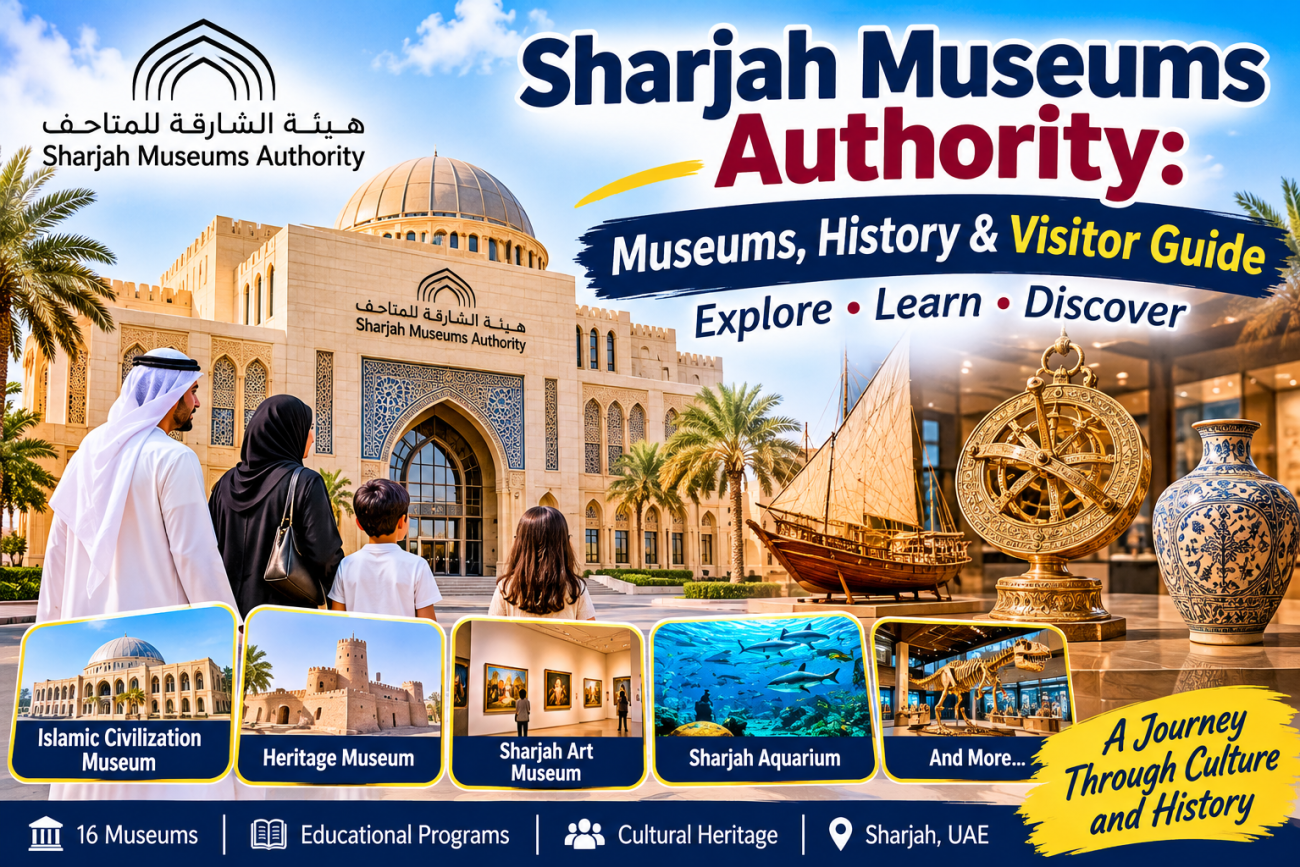
Sharjah is widely recognised as one of the most important cultural destinations in the United Arab Emirates. Known for its historical landmarks, traditional architecture, art galleries, and educational attractions, the emirate offers visitors an opportunity to explore the region’s fascinating past. At the centre of this cultural development is the Sharjah Museums Authority, an organisation dedicated to preserving history, protecting heritage, and making museums accessible to people from different backgrounds.
Whether you are a tourist, student, researcher, or history enthusiast, Sharjah’s museums provide an excellent opportunity to learn about the UAE’s cultural identity. From ancient archaeological discoveries to Islamic art, marine life, and contemporary exhibitions, there is something interesting for everyone.
The Sharjah Museums Authority plays an essential role in managing and developing the emirate’s museum sector. Its work helps preserve valuable collections, support education, and encourage people to appreciate the importance of history and culture.
In this article, we will explore the authority’s responsibilities, popular museums, educational activities, and the reasons why its work makes Sharjah a leading cultural destination.
What Is Sharjah Museums Authority?
The Sharjah Museums Authority (SMA) is a government organisation established in 2006 under the vision of His Highness Sheikh Dr. Sultan bin Mohammed Al Qasimi, Supreme Council Member and Ruler of Sharjah.
Its primary responsibility is to develop and manage museums across the emirate while preserving important historical, cultural, artistic, and scientific collections.
The organisation works to make museums more than places where historical objects are displayed. It aims to create educational environments where visitors can explore ideas, understand different cultures, and develop a deeper appreciation of the past.
Through exhibitions, research, conservation projects, and community programmes, the authority connects historical knowledge with modern audiences.
Main Objectives of Sharjah Museums Authority
The authority follows several important objectives that support the cultural development of Sharjah.
1. Preserving Cultural Heritage
One of its most important responsibilities is protecting the UAE’s cultural heritage. Museums preserve historical objects, traditional artefacts, documents, photographs, and archaeological discoveries that represent the region’s history.
These collections help future generations understand how communities developed, how people lived, and how traditions changed over time.
2. Supporting Education and Research
Museums are valuable educational resources. The authority develops learning opportunities for students, teachers, researchers, and families.
Through educational workshops, guided tours, exhibitions, and interactive activities, visitors can learn about history and culture in an engaging way.
3. Promoting Art and Cultural Awareness
Sharjah has a strong reputation for supporting art, creativity, and cultural exchange. The authority contributes to this reputation by organising exhibitions and programmes that introduce visitors to local and international artistic traditions.
4. Encouraging Tourism
Museums attract visitors who want to discover the cultural side of the UAE. By maintaining interesting exhibitions and improving visitor experiences, the authority supports Sharjah’s tourism industry and strengthens its international cultural reputation.
Popular Museums Managed by Sharjah Museums Authority
The authority oversees a diverse collection of museums across Sharjah. Each museum offers a different experience, allowing visitors to explore the emirate’s history, science, art, and traditions.
1. Sharjah Museum of Islamic Civilization
One of the most important cultural attractions in the emirate is the Sharjah Museum of Islamic Civilization. It provides visitors with an opportunity to explore the development of Islamic civilisation and its contributions to different fields of knowledge.
The museum features historical manuscripts, scientific instruments, ceramics, coins, textiles, and beautiful examples of Islamic art.
Its exhibitions explain how Islamic civilisation influenced mathematics, astronomy, medicine, architecture, and other areas of human development.
The museum is an excellent destination for students, researchers, and tourists interested in Islamic history and cultural heritage.
2. Sharjah Heritage Museum
The Sharjah Heritage Museum offers a fascinating look into traditional Emirati life. It introduces visitors to the customs, values, and traditions that shaped communities in the UAE.
Its collections include traditional clothing, household objects, jewellery, and items connected with celebrations, family life, and social customs.
Visitors can learn about traditional occupations, local environments, and the importance of family and community in Emirati society.
This museum is particularly valuable for anyone who wants to understand the cultural identity of the UAE beyond its modern buildings and developments.
3. Sharjah Archaeology Museum
The Sharjah Archaeology Museum takes visitors on a journey through the ancient history of the emirate.
Its exhibitions present archaeological discoveries from different periods, including objects that reveal how early communities lived, worked, traded, and interacted with their surroundings.
Visitors can explore ancient tools, pottery, jewellery, burial objects, and other historical discoveries.
The museum helps explain how Sharjah developed over thousands of years and why archaeological research is important for understanding the region’s past.
4. Sharjah Maritime Museum
The Sharjah Maritime Museum highlights the historical relationship between the people of the UAE and the sea.
For generations, coastal communities depended on fishing, pearl diving, boatbuilding, and maritime trade. The museum explains how these activities influenced the region’s economy and way of life.
Visitors can discover traditional boats, fishing equipment, pearl-diving tools, and other objects connected with maritime traditions.
It is an interesting attraction for families and anyone curious about the UAE’s coastal heritage.
5. Sharjah Aquarium
The Sharjah Aquarium introduces visitors to the fascinating marine environment of the Arabian Gulf.
It features different marine species, including colourful fish, rays, sharks, and other underwater creatures.
The aquarium provides information about marine ecosystems and the importance of protecting sea life. Its educational displays help visitors understand how marine animals live and why environmental conservation matters.
It is particularly popular with families and school groups because it combines entertainment with learning.
6. Sharjah Art Museum
Sharjah Art Museum is an important destination for art lovers and creative individuals. It provides a platform for appreciating regional and international artwork through permanent collections and temporary exhibitions.
The museum displays paintings, sculptures, and other artistic works created by established and emerging artists. Its exhibitions explore different artistic styles, cultural themes, and historical periods.
Visitors can discover the development of modern Arab art while learning about the creative traditions of the wider region.
The museum also supports artistic education through exhibitions and cultural activities. It is an excellent place for anyone interested in visual arts and creative expression.
7. Sharjah Science Museum
The Sharjah Science Museum makes science interesting and accessible through interactive displays and educational experiences.
Visitors can explore different scientific subjects, including physics, astronomy, biology, and technology. Interactive exhibits allow children and adults to experiment, observe, and understand scientific concepts.
The museum is particularly suitable for school visits and families because it encourages learning through practical activities.
8. Sharjah Discovery Centre
The Sharjah Discovery Centre is designed especially for younger visitors. It provides children with an enjoyable environment where they can explore different subjects through interactive activities.
Its learning experiences introduce children to science, technology, communication, and everyday life. Rather than simply reading information, young visitors can participate in activities that encourage creativity and problem-solving.
It is an excellent educational destination for families with children.
Educational and Community Programmes
Education is one of the central priorities of the Sharjah Museums Authority. Its programmes are designed to make museums welcoming learning spaces for people of different ages and backgrounds.
School and Student Visits
The authority offers educational experiences for schools and academic institutions. Students can explore museum collections, participate in discussions, and take part in workshops.
These activities help connect classroom learning with real historical objects and cultural experiences.
Workshops and Interactive Activities
Workshops allow visitors to develop practical skills while learning about art, history, science, and heritage.
Activities may include creative art sessions, cultural discussions, demonstrations, and hands-on learning experiences. These programmes encourage visitors to become active participants rather than simply observers.
Community Engagement
The authority also organises community programmes to encourage cultural participation. These activities help people connect with their heritage and understand the importance of preserving historical knowledge.
Its educational approach makes museums valuable spaces for lifelong learning.
Why Is Sharjah Museums Authority Important?
The Sharjah Museums Authority contributes significantly to the cultural identity and international reputation of the emirate.
Preserving History: Its museums protect important historical collections and ensure that valuable objects remain available for future generations.
Promoting Cultural Understanding: Exhibitions introduce visitors to different traditions, beliefs, artistic styles, and historical experiences.
Supporting Tourism: Museums attract international tourists and provide additional reasons to explore Sharjah beyond its shopping centres and modern attractions.
Encouraging Education: Students and researchers gain access to educational resources that improve their understanding of history, science, and culture.
Supporting Accessibility: The authority works to make museum experiences accessible to different visitors, including people with disabilities.
Visitor Information and Useful Tips
If you are planning to explore museums managed by the Sharjah Museums Authority, a little preparation can make your experience more enjoyable.
Here are some useful tips:
- Check opening hours: Museum schedules can vary, particularly during Ramadan and public holidays.
- Explore ticket options: Some museums offer free admission, while others have individual or combined tickets.
- Plan your route: Choose museums located near each other to make the most of your visit.
- Book group visits: Schools, academic groups, and organised tours may need advance reservations.
- Follow museum guidelines: Respect photography rules and avoid touching displayed objects.
- Allow enough time: A general museum visit can take approximately 30 to 60 minutes, depending on the location and your interests.
Visitors can find official information about museum locations, tickets, opening hours, exhibitions, and special programmes on the authority’s website.
Conclusion
The Sharjah Museums Authority plays an essential role in protecting the cultural heritage and historical identity of the United Arab Emirates. Through its network of 16 museums, it provides valuable opportunities to explore archaeology, Islamic civilisation, art, science, marine life, and traditional Emirati culture.
Its commitment to education, research, conservation, and community engagement makes museums meaningful destinations for both residents and international visitors.
Whether you are interested in ancient discoveries, traditional architecture, artistic exhibitions, or interactive science activities, Sharjah offers an enriching experience for everyone.
Visiting these museums is not just an opportunity to see historical objects. It is a chance to understand the stories, traditions, and achievements that have shaped the region.
If you want to discover the cultural side of the UAE, exploring the museums managed by the Sharjah Museums Authority is an excellent place to start.
FAQs
1. What is Sharjah Museums Authority?
Sharjah Museums Authority is a government organisation established in 2006. It oversees 16 museums across Sharjah and works to preserve cultural heritage, promote education, and improve public understanding of history and art.
2. How many museums are managed by Sharjah Museums Authority?
The authority oversees 16 museums covering different subjects, including archaeology, Islamic civilisation, art, heritage, science, marine life, and the history of Sharjah.
3. Are Sharjah museums free to visit?
Some museums offer free admission, while others charge entrance fees. According to the authority’s visitor information, Sharjah Art Museum and Al Eslah School Museum offer free entry. Visitors should check the official website for current ticket information.
4. Which Sharjah museums are best for children?
Sharjah Discovery Centre, Sharjah Science Museum, and Sharjah Aquarium are particularly suitable for children. They offer interactive displays and educational experiences that make learning enjoyable.
5. Where can I find information about Sharjah museum tickets and opening hours?
You can visit the official Sharjah Museums Authority website at sharjahmuseums.ae. It provides information about museum locations, tickets, opening hours, exhibitions, educational programmes, and visitor facilities.
